Game Details
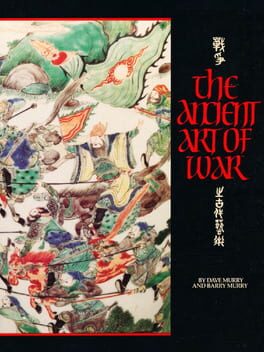
The Ancient Art of War
Genres: Real Time Strategy (RTS), Strategy
Released on: PC-9800 Series, PC-8800 Series, Atari ST/STE, Mac, DOS, Amiga, Apple II, Amstrad CPC
Developer: Evryware
Publisher: Brøderbund Software
Themes: Historical, Warfare
Game Modes: Single player
Perspective: Bird view / Isometric
| Platform | Release Date |
|---|---|
| Apple II | December 31, 1984 |
| DOS | December 31, 1984 |
| Mac | December 31, 1985 |
| PC-8800 Series | December 01, 1986 |
| PC-9800 Series | December 31, 1987 |
| Amiga | December 31, 1990 |
| Amstrad CPC | December 31, 1990 |
| Atari ST/STE | December 31, 1990 |
Login to rate this game
About:
The Ancient Art of War is a computer game developed by Evryware and published by Broderbund in 1984. In retrospect, it is generally recognized as one of the first real-time strategy or real-time tactics games. A battlefield simulation, the game's title comes from the classic strategy text The Art of War written by Sun Tzu around 400 B.C. The objective of the game is to win a series of battles using four types of troops: Knights, Archers, Barbarians, and Spies. All four types are unmounted. It uses the simple "Rock-Paper-Scissors" type of unit balance typical of the genre. Knights beat Barbarians in melee; Barbarians have the advantage over Archers; and Archers have the advantage over Knights, in addition to being effective at defending against attempts to storm a fort. Spies did not fight, but had twice the range of any other unit type in terms of lifting the fog of war. At the start of the game, the player is able to select from a list of campaigns to play. The campaigns include both skirmishes and "capture the flag(s)" type missions, while the terrain layout and initial starting units provided a variety of strategic options for game play. Advanced rule sets such as Training New Units and Supply Line Lengths allow for more customization. The player can also select from among several Artificial Intelligence opponents represented by various historical figures such as Geronimo and Napoleon. Sun Tzu represents the most difficult level. These settings affected both AI behavior, as well as certain properties such as the speed at which enemy units moved through difficult terrain. There is no element of the economic management (mining, gathering or construction) which is a common feature of later real-time strategy games.
Story:
No storyline available