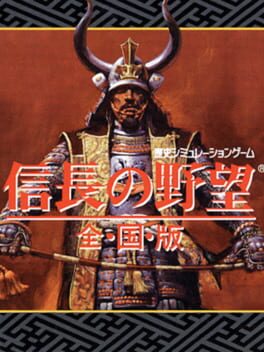
Game Details
Nobunaga no Yabou: Zenkoku-ban
Genres: Strategy
Released on: PlayStation, PlayStation 3, PlayStation Portable
Publishers: Koei , Koei Tecmo , Koei
Themes: Historical
Game Modes: Single player, Multiplayer
Perspective: Bird view / Isometric
| Platform | Release Date |
|---|---|
| PlayStation | January 22, 1998 |
| PlayStation 3 | March 04, 2010 |
Login to rate this game
About:
Nobunaga No Yabou Zengokuban (Nobunaga's Ambition - Whole Country Version) is the second title in the series. PlayStation revived in the "national version of Nobunaga's Ambition" timeless masterpiece of historical simulation. 5 of this book included the scenario of a mode for beginners in 17 countries and four mode 50 countries dealing with Japan. And dialects with the mode "Ninja", and give the message to become a regional dialect of damage to the enemy. Multiplayer can also be a maximum of eight people. Experience the Raging Gale Sengoku! The player may choose from four campaign scenarios including: "Battle for the East" (beginning in 1560), "Daimyo Power Struggles" (1560), "Ambition Untamed" (1571) and "Road Towards Unification" (1582). In each scenario, the player must allocate resources to raise a capable military force, provide a productive economy to support both military and civilian expansion and support the peasants in order to sustain their respect and loyalty. Gameplay is taken in turns, with each turn in the map view corresponding to a season and each turn during battle corresponding to a day. The player may achieve victory through numerous means, among which are forcing the enemy to retreat, destroying the enemy command unit, outlasting an invading force, or prolonging battle until the opposing force has exhausted its supplies.
Story:
Nobunaga's Ambition takes place during the Sengoku period of feudal Japan. As the title suggests, the player is tasked with achieving the ultimate goal of warlord Oda Nobunaga: the conquest and unification of Japan. Selecting Oda Nobunaga is optional, however, as the player is also able to choose from a variety of other regional daimyos of the time.